GLP-1 for Addiction
What We Know About Cravings & Recovery
Written by Emma Nagle, LCSW | September 9, 2026
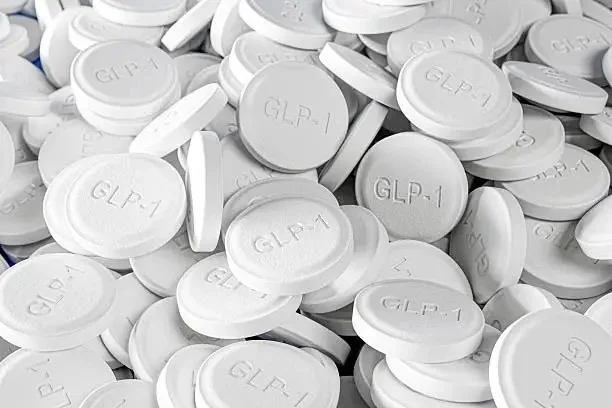
GLP-1 medications like semaglutide (Ozempic, Wegovy) and tirzepatide (Mounjaro, Zepbound) have become widely known for their effects on blood sugar, appetite, and weight. More recently, researchers have begun asking a different question: could these medications also affect cravings for alcohol and other substances?
The idea has gained attention partly because many people taking GLP-1 medications have reported something unexpected: a decrease not only in food cravings, but in cravings for alcohol, nicotine, and other rewarding substances.
There is now early clinical evidence to support some of these observations, particularly around alcohol use disorder (AUD). But it is important to distinguish between a promising area of research and an established addiction treatment. GLP-1 medications are currently approved for diabetes and/or weight management with a few medical providers exploring these medications as an off-label treatment option for substance use disorders (not currently approved by the FDA/insurance companies).

What does a GLP-1 have to do with cravings?
GLP-1 is a hormone involved in regulating appetite, blood sugar, and satiety. GLP-1 receptors are also found in areas of the brain involved in reward and motivation.
Addiction involves more than simply "wanting" a substance. Repeated substance use can strengthen reward pathways and learned associations between a substance and relief, pleasure, escape, or emotional regulation. Researchers are investigating whether GLP-1 medications may influence some of these same reward pathways, potentially reducing the intensity or salience of cravings.
In other words, the medication may quiet some of the noise around reward.
That doesn't mean it eliminates addiction or changes someone's relationship with a substance overnight.
What does the research show?
The evidence is still relatively new, but several human studies are encouraging. Addiction Medicine Physician Dr. Steven Klein has discussed how the powerful gut-brain peptides quiet persistent "food noise" and "drug noise" by directly targeting the mesolimbic dopamine system, which controls the brain’s fundamental reward circuitry.
A 2025 randomized controlled trial of adults with alcohol use disorder found that low-dose semaglutide reduced weekly alcohol craving and reduced some measures of alcohol consumption compared with placebo.
In 2026, researchers published a larger 26-week randomized trial involving people with both alcohol use disorder and obesity. Participants receiving semaglutide alongside cognitive behavioral therapy (CBT) had fewer heavy-drinking days than those receiving placebo alongside therapy.
Another 2026 randomized trial of oral semaglutide found reductions in heavy-drinking days, drinks consumed per drinking occasion, naturalistic alcohol craving, and alcohol-related consequences. Interestingly, the medication did not significantly reduce the study's primary measure of cue-induced craving.
The findings are encouraging, but they don't yet tell us that GLP-1s are an addiction cure. More larger-scale randomized controlled trials research is needed to understand who is most likely to benefit, how long the effects last, and whether GLP-1 medications will ultimately have a role in the treatment of alcohol use disorder.
What about addictions other than alcohol?
Researchers are investigating whether GLP-1 medications might eventually have applications across different substance use disorders because of their effects on reward and motivation. There is interest in nicotine, opioids, stimulants, and even behavioral addictions.
But the evidence is much less developed outside of alcohol, but is growing to include Opioid Use Disorders (OUD). Much of the excitement around these applications currently comes from preclinical research, observational studies, or emerging clinical data rather than established treatment guidelines.
Could reducing cravings actually help recovery?
Potentially. One of the more interesting possibilities isn't that a GLP-1 medication would somehow do the work of recovery, but that reducing the intensity of cravings could create more room for someone to do that work themselves.
Think about the difference between trying to make a thoughtful decision while an urge is consuming your attention and making that same decision when the urge is quieter.
For someone in recovery, less craving could potentially mean more opportunity to use coping skills, attend therapy, reconnect with relationships, build new routines, and experience rewards outside of substance use. In a podcast episode from RECOVERable, Dr. Steven Klein describes the idea that GLP-1s may quiet both "food noise" and "drug noise," explaining the possibility of using that quieter internal state to create room for behavioral change.
Just like other medication assisted treatment (MAT) options, using a GLP-1 in addiction treatment may turn down the volume on cravings without necessarily changing the underlying patterns that made the substance rewarding in the first place. The medication may help with one piece of the puzzle, while the underlying emotional, psychological, and environmental factors contributing to a substance use disorder still require attention.
A few important caveats
GLP-1 medications are not currently FDA-approved treatments for substance use disorders.
They also aren't appropriate for everyone and can have significant side effects and contraindications. Their use for addiction would currently be considered “off-label” and should involve a qualified medical provider who can consider the person's full medical and psychiatric history.
There is also still a lot we don't know. We don't yet know how effective GLP-1s will be across different substances, which people are most likely to benefit, how long any reduction in cravings lasts, or what happens to cravings after someone stops taking the medication.
These are important questions because reducing cravings temporarily is different from creating lasting recovery.
The bigger picture
I find the emerging research around GLP-1s interesting for another reason: it challenges the idea that addiction can be reduced to willpower and treated with the 12-steps or talk therapy. The more we understand addiction as a complex interplay of biological, psychological, and environmental factors, the more important it becomes to approach treatment from multiple angles.
If medications that influence metabolic and reward pathways can also influence substance cravings, it gives us another window into how deeply interconnected the brain, body, and behavior really are.
There is still much to learn, but we can expect to hear more about the potential role of GLP-1s in addiction treatment as research continues to develop. For now, GLP-1 medications are best understood as a promising area of addiction research, not a replacement for the broader work of recovery.
Need Help?
Looking for a therapist to help you navigate substance use or boundary-setting with a loved one who is using? Book a consultation with me here.
For additional substance use support and resources including a treatment locator, visit SAMHSA or the National Helpline: 1-800-662-HELP (4357).
If you’re considering a GLP-1 for weight management, talk with your healthcare provider about whether it’s right for you.
Sources and Further Reading:
Hendershot, C. S., et al. (2025). Once-weekly semaglutide in adults with alcohol use disorder: A randomized clinical trial. JAMA Psychiatry, 82(2), 111–119.
Klausen, M. K., et al. (2026). Once-weekly semaglutide versus placebo in patients with alcohol use disorder and comorbid obesity: A randomized, double-blind, placebo-controlled trial. The Lancet.
Schacht, J. P., et al. (2026). Oral semaglutide for alcohol use disorder: A randomized clinical trial. American Journal of Psychiatry.
McGuire, T. (Host). (2026). Ozempic and cravings: How GLP-1 drugs work for addiction [Podcast episode]. RECOVERable.
